.png)
How To Breathe-up for Freediving and Spearfishing

Updated: Dec 15, 2025
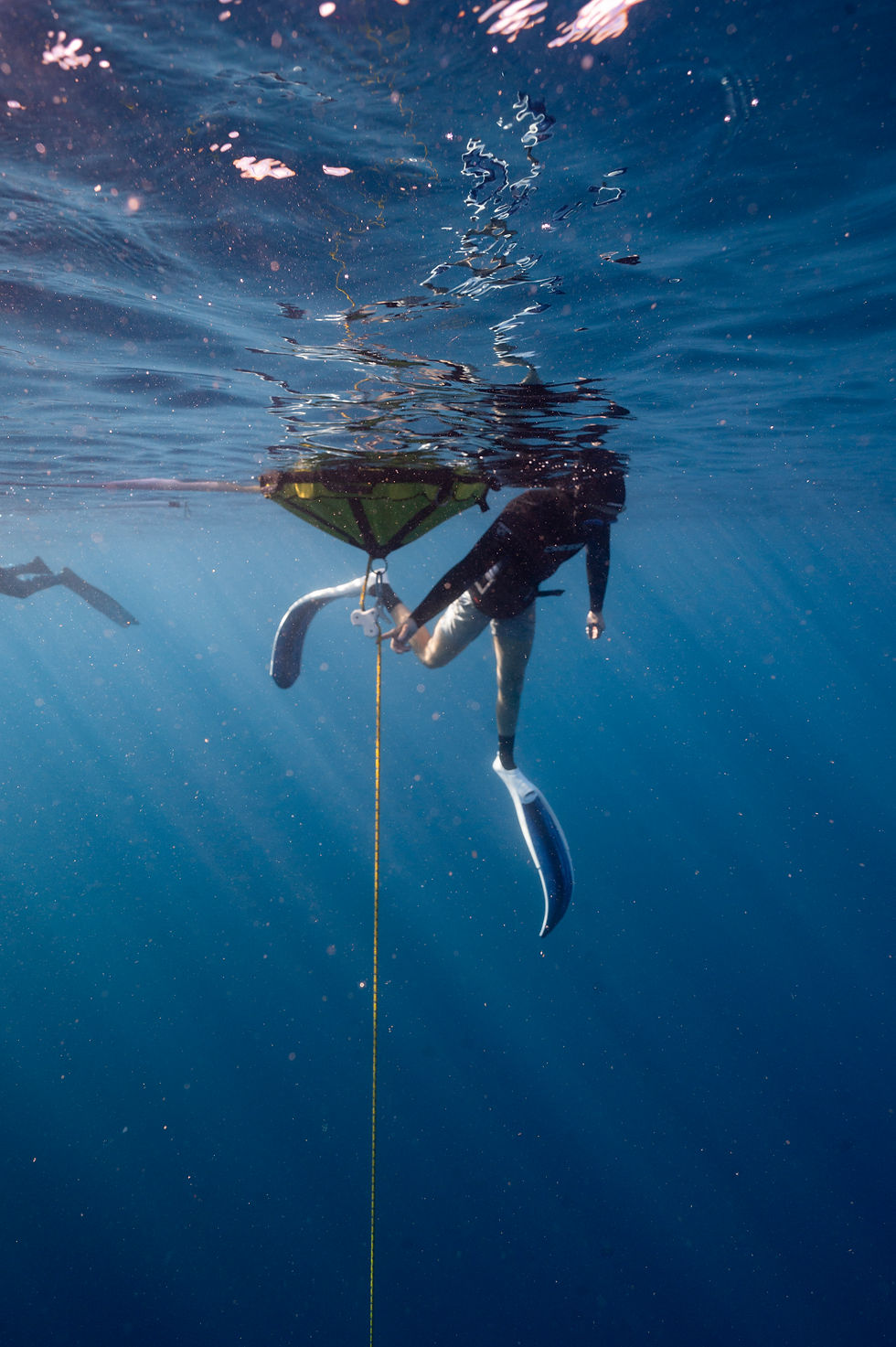
Are you ready to learn the secret to a proper breathe-up?
In this article I will teach you my favourite way to breathe-up before a dive.
What is the breathe-up?
The breathe-up is also known as the 'relaxation phase', it's the time you take before a dive to get in the zone.
The more relaxed you are at the start of the dive, the better your dive is going to be.
How to Breathe-up
I want you to think of the breathe-up as more than just the breathing pattern before the dive, as it involves the breath, mind, and body.
First, let's look at the breath.
Tidal Breathing
The first step of the breathe-up is to settle into a relaxed, resting breathing rate, known as tidal breathing. This is simply the way you breathe when you’re at your calmest, where the breath moves continuously and effortlessly.
Focus on directing the breath into your belly, because diaphragmatic breathing has been shown to reduce tension in the upper chest and activate the parts of the nervous system responsible for relaxation.
You’ll stay in this tidal breathing pattern for roughly two minutes before your breath-hold. That’s long enough for your physiology to stabilise without over-breathing or altering your CO₂ balance too much.
Tidal breathing is so effective because it directly engages the parasympathetic nervous system - the “rest and digest” branch. Diaphragmatic breathing increases vagal tone, which in turn slows your heart rate, reduces blood pressure, and helps quiet the mind.
Studies in respiratory physiology and sports psychology both show that controlled, relaxed breathing can improve mental focus and lower pre-performance anxiety, which is exactly what you want heading into a breath-hold.
By the time you finish your two minutes of calm, continuous breathing, your body should already be drifting into that relaxed freediving state where everything feels slower, softer, and more efficient.
Getting the body ready
As you are tidal breathing, it's important to reduce any physical tension in your body.
When you hold tension, you genuinely burn more oxygen.
Muscle fibres use ATP even at rest, but when they contract, oxygen consumption increases significantly. This also keeps your heart rate elevated because your sympathetic nervous system stays switched on, which means your mind stays active and alert rather than settling into that calm parasympathetic state we want before a dive.
During your breathe-up, perform a full-body scan. Work from head to toe and consciously soften every muscle group. There’s research showing that progressive relaxation techniques reduce heart rate, improve vagal tone, and increase feelings of calm, all of which translate to a more efficient pre-dive state.
Once I finish my body scan, I also like to let out a big “ahhh.” Physiologically, sighing is a natural reset for your nervous system. Studies show that a deliberate sigh can stimulate the vagus nerve, increase parasympathetic activity, and help down-regulate stress hormones. It’s basically a built-in relaxation switch.
Another tip is to keep your eyes half-closed. Visual input is one of the biggest stimulants to the brain, so if your eyes are wide open, your mind stays alert and engaged, and this uses more energy.
Half-closing the eyes reduces sensory load, helps calm the mind, and supports that drop into a slower heart rate and deeper relaxation, which is exactly what we want before a breath-hold.
Getting the Mind Ready
Just doing the tidal breathing and the physical relaxation strategies above will be enough for most divers to slip into a deeply relaxed state.
When the body is calm, the mind usually follows.
But if you’re someone who still struggles to switch off before a dive, you can take it a step further and intentionally prime your mental state as well.
One of the simplest tools is positive self-talk. There’s good evidence in sports psychology showing that positive, action-oriented self-talk can reduce performance anxiety, improve focus, and even increase endurance.
In freediving, this could be as simple as repeating calm cues to yourself like “soft,” “slow,” “relax,” or “I’m in control.” These types of verbal cues help shift attention away from intrusive thoughts and anchor you in the moment.
When doing verbal cues, avoid the negative. What I mean by this is, instead of saying 'I will not tense up', tell yourself, ' I will remain relaxed'. If you use the negative adjective, it puts that image in your head.
You can also use extrospection.
Instead of focusing on what’s happening inside your head, shift your attention outward. Feel the water gently moving beneath you, notice how your body rises and falls with each breath, and sense the temperature of the water against your skin. When you attune yourself to the environment rather than resisting it, your nervous system naturally relaxes.
Research shows that this kind of sensory grounding can reduce cognitive load and help quiet the default mode network - the part of the brain that generates overthinking.
Visualisation is another powerful tool.
Many elite freedivers use it to rehearse a dive before it happens. Picture yourself moving through the water with ease, equalising smoothly, feeling calm, and surfacing with control. Mental rehearsal activates similar neural pathways to physical practice, and studies across endurance sports show it can improve confidence, reduce anxiety, and support better performance outcomes.
You don’t need all of these techniques every time. The goal is simply to find the combination that helps your mind soften into that parasympathetic state where you feel present, relaxed, and connected to the water. When your mind and body are aligned, your breath-hold becomes smoother, safer, and far more enjoyable.
Setting Yourself Up for a Calm, Controlled Breath-Hold
Relaxation isn’t just a “nice to have” in freediving, it is the foundation that every safe and successful dive is built on.
When you combine tidal breathing, full-body relaxation, and mental preparation techniques like positive self-talk, extrospection, and visualisation, you’re creating the exact internal environment your body needs to perform well underwater.
Lower heart rate, reduced oxygen consumption, and a quieter mind all mean one thing, a smoother, more enjoyable dive.
Like any skill in freediving, mastering relaxation takes practice, guidance, and the right feedback. Most divers dramatically improve their breath-hold comfort and confidence once they train with an instructor who can refine their technique, correct common mistakes, and coach them into that deeper parasympathetic state.
If you want to take your diving to the next level, feel more relaxed in the water, or finally understand how to breathe properly for freediving, join us for a Beginner or Advanced course. You’ll learn all of this in a hands-on, supported environment and walk away with the confidence and skills to dive safely and comfortably.
Ready to upgrade your diving?
Book your next course with Deep Sensations Freediving and start experiencing what your body is truly capable of.


Comments